Years after the earthquake, families still need help. Help us reach them.
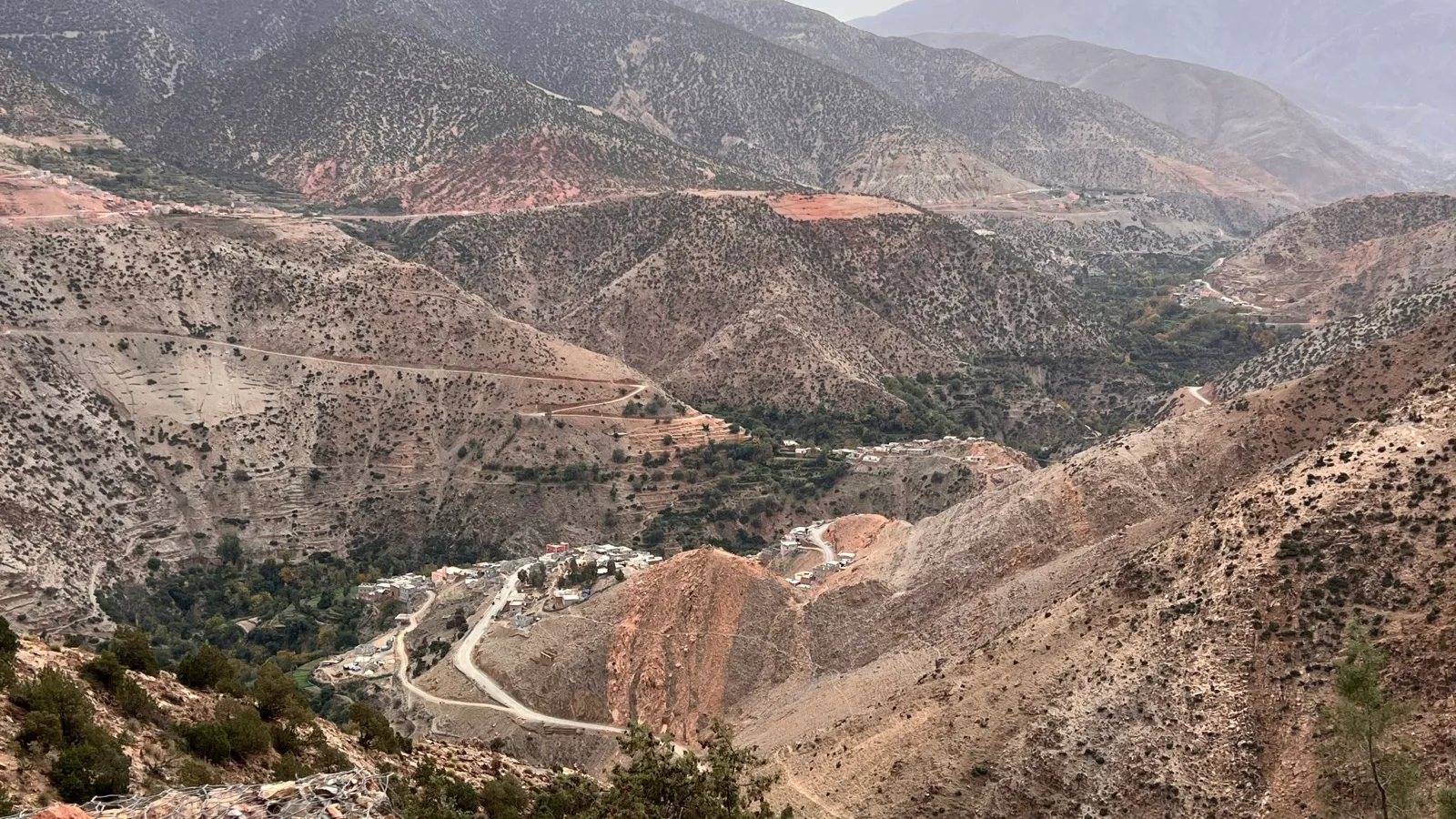
In the remote High Atlas Mountain villages we visit, families are still living with the consequences of the earthquake. Children still need resources to learn, and women need practical opportunities to earn and support their families.
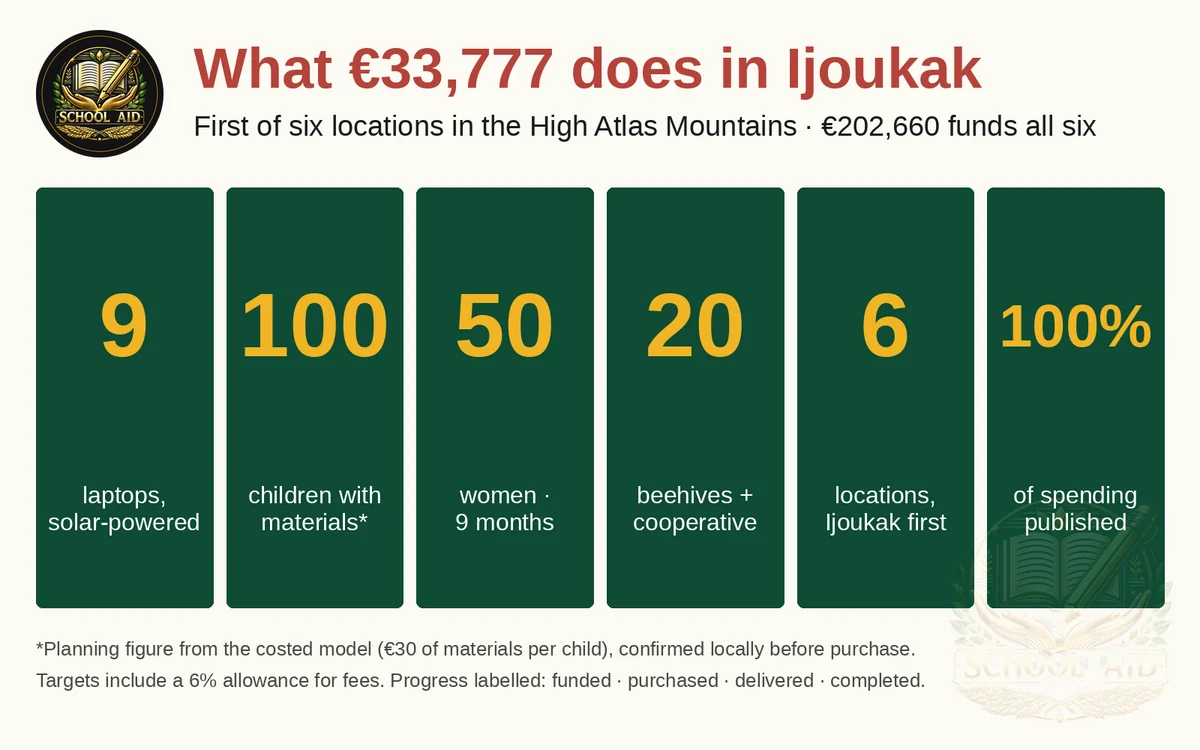
€33,777 for Ijoukak first. €202,660 for the full six-location programme, delivered in phases.
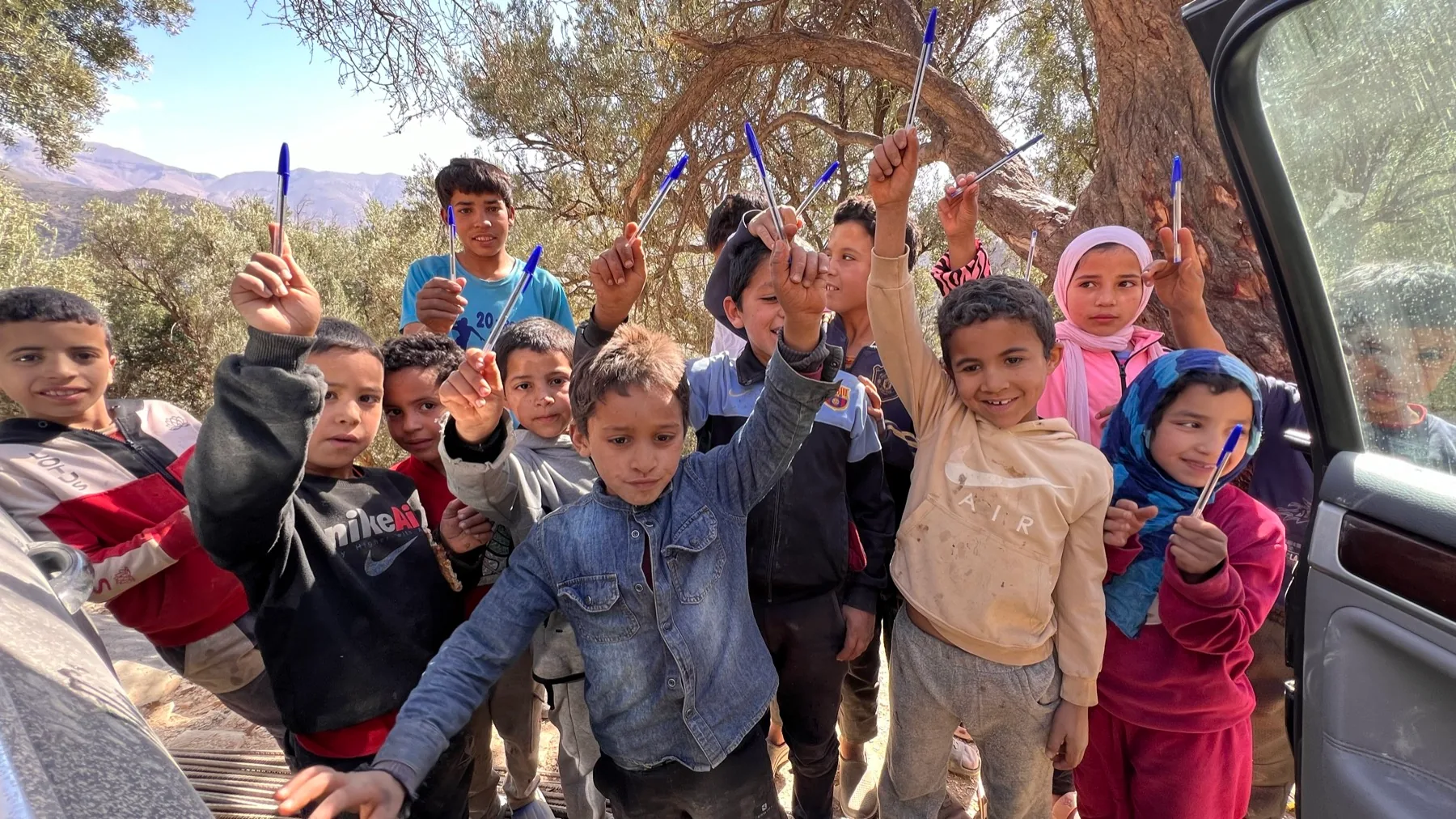
They asked for pens. That is where School Aid began.
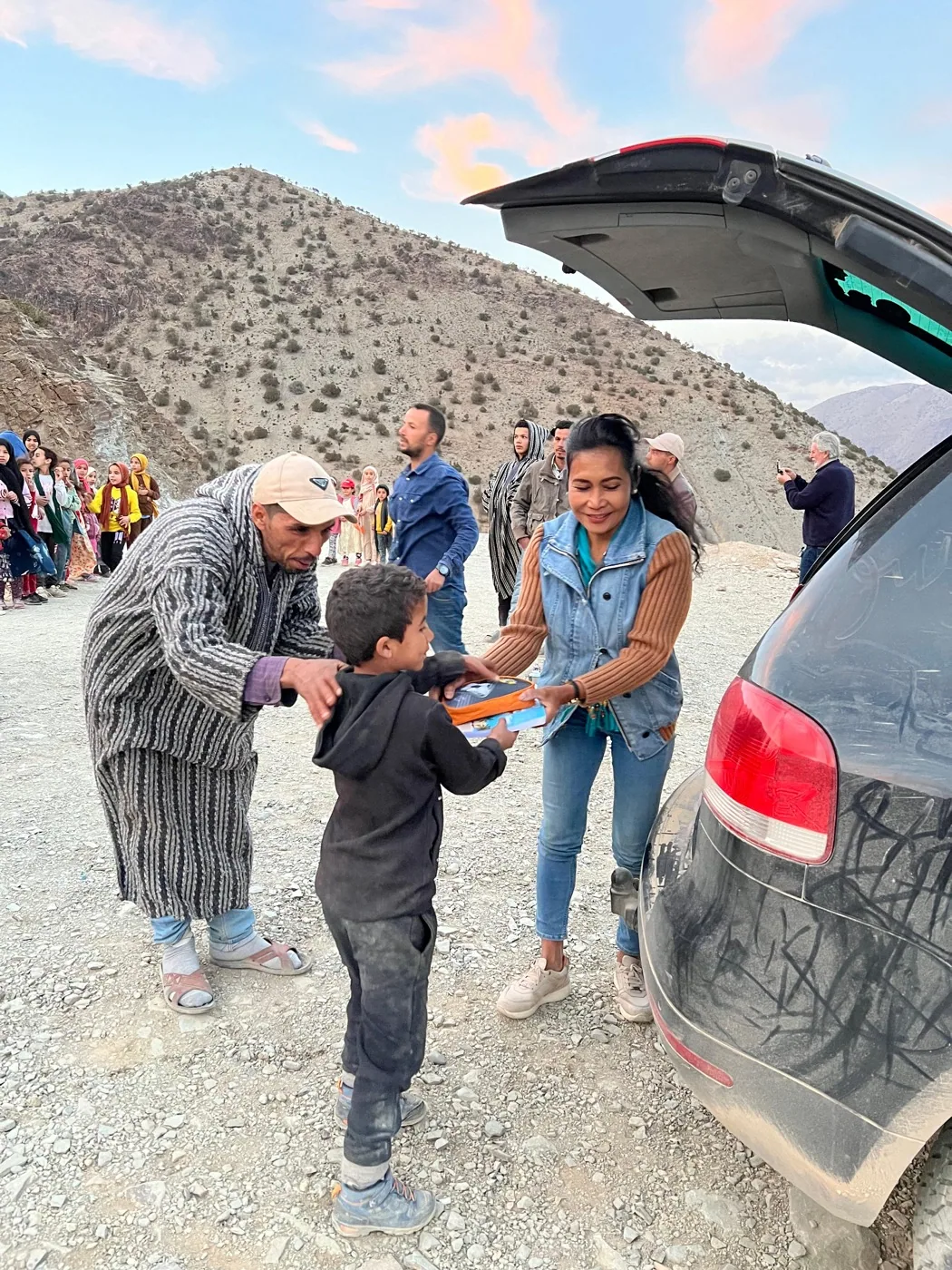
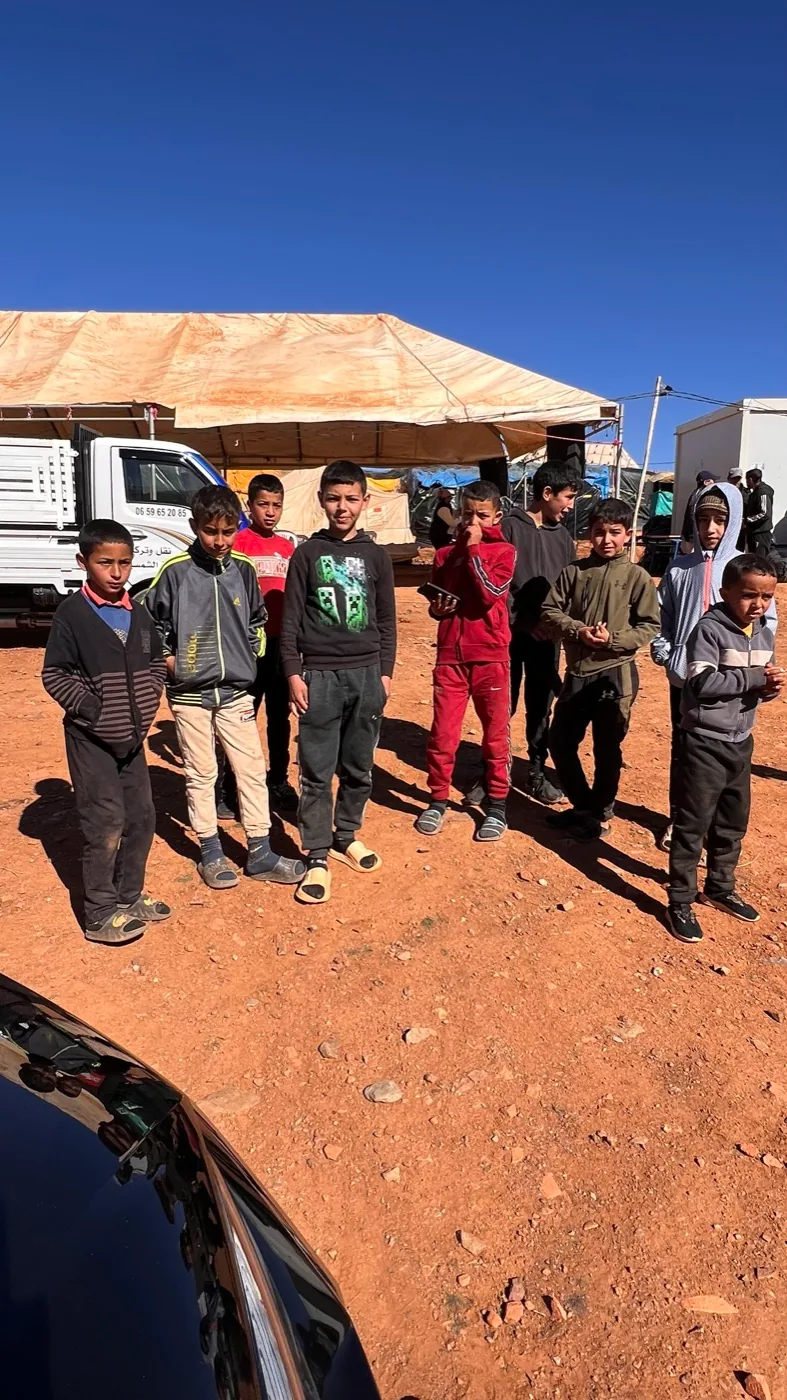
When my wife and I travelled through the High Atlas Mountains after the earthquake, children approached us asking for pens. We handed out what we had, bought more supplies in the next villages and kept going. We could not keep up with the need.
On our return visits, we found that practical educational support became harder to find the farther we travelled from the larger towns. We worked with local representatives, obtained authorisation for distributions and returned with more supplies.
Those visits became School Aid. The relationships have continued, and so has our commitment to help.
The need did not end when the headlines moved on
The September 2023 earthquake deepened hardship in communities where access to education and income was already limited.
In the mountain villages we visit, children still need adequate learning resources. Women we have met have had little access to formal education and face limited opportunities to earn an income.
Our response builds on those relationships: practical learning for children and women, shaped by the communities themselves.
Ijoukak comes first
Our first programme will use the community area in Ijoukak’s old buildings, agreed with the village head.
Digital learning for children
The programme provides nine laptops and solar-supported power, giving children access to digital learning resources.
Learning materials for around 100 children, planned at €30 per child and confirmed locally before purchase.
Literacy and livelihood education for women
For fifty women, the programme provides nine months of literacy and practical livelihood education, including practical beekeeping training, twenty beehives and support for working cooperatively.
The beekeeping component builds on the region’s established honey-producing tradition. It aims to develop practical skills and income opportunities; it does not promise a guaranteed income or honey yield.
Teaching will be primarily in Tachelhit, with Moroccan Arabic support. Practical demonstrations and pictures will accompany literacy teaching.
Fund the first community. Help us reach the next.
Ijoukak, first location: €33,777.
Full Morocco programme, six locations including Ijoukak: €202,660.
We are raising funds for Ijoukak first, while showing the full programme we intend to deliver across six locations.
These targets use our approved planning budgets and include an allowance for payment and platform charges estimated at 6% of gross donations. We will report the actual charges.
Programme costs are researched planning estimates. Final purchasing and delivery costs will be recorded as the work proceeds.
100% of our spending will be published, with progress labelled funded · purchased · delivered · completed.
Ways to give
Every gift counts. €10 helps buy school supplies for a child; €60 covers a child’s learning materials for a year; €210 funds nine months’ training for one woman; €1,050 trains five women.
Larger gifts fund whole parts of the programme, and the village has invited us to recognise them: name one of the 20 beehives (€500), a solar learning station (€1,900), the women’s programme (€10,600) or the digital classroom (€23,200). Donors who fund the digital classroom or the whole first location (€33,777) are invited by the village to visit Ijoukak and stay overnight, with travel and accommodation at their own cost and risk. Visits are arranged in advance and follow our safeguarding rules.
Every amount is the full delivered cost — purchase, transport to the village, installation, local coordination and payment fees. Any unspent contingency goes to the next location. For gifts of €10,000 or more, or to discuss naming or a visit, email david@school-aid.eu.
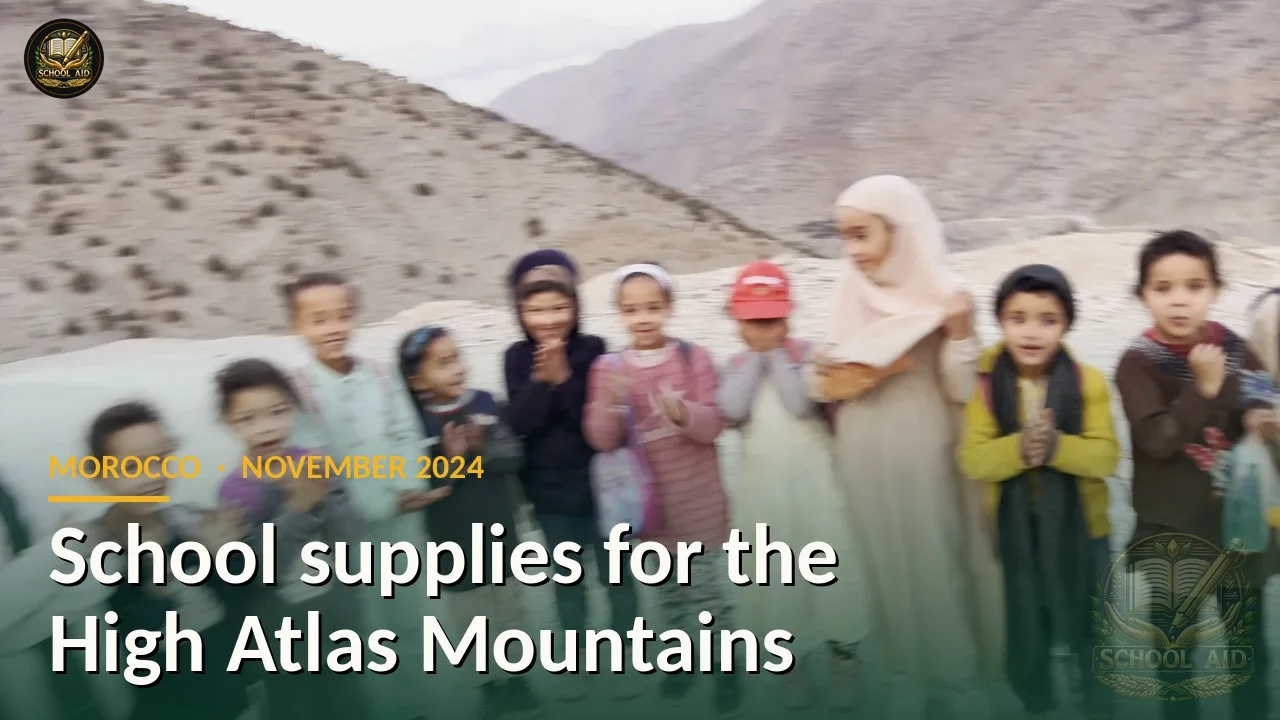
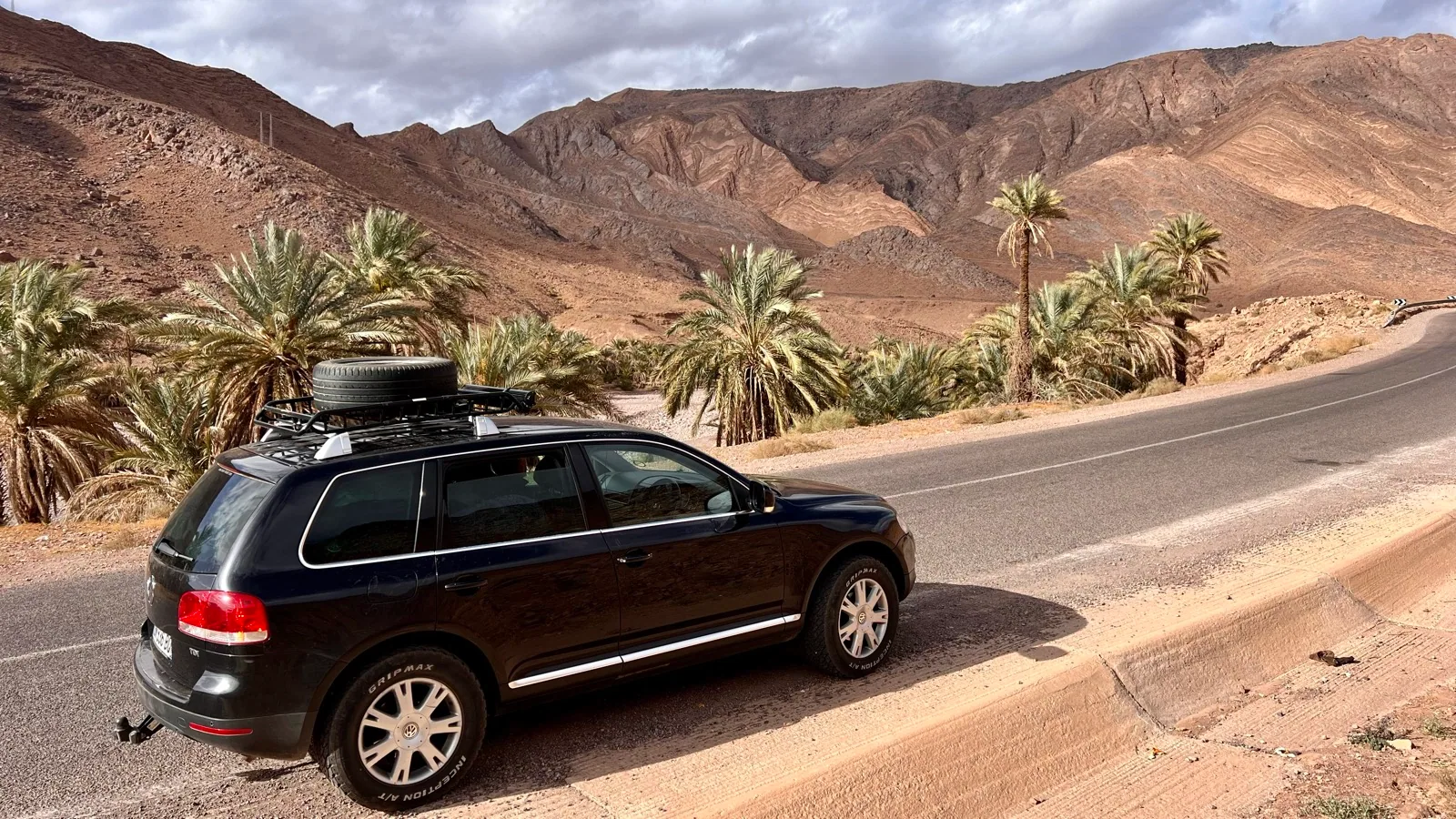
Six short films, in order: how School Aid began, what we found in the High Atlas Mountains, and Barclay’s drive through the fog. Each opens on YouTube, or watch them all in our Morocco playlist.
Our main film — school supplies for children and teachers in the High Atlas Mountains (4 min 55 s).
Nothing loads from YouTube until you press play. Watch on YouTube.
Our visits are documented
Our field reports describe the journey that began School Aid and the subsequent deliveries of learning materials. They distinguish completed deliveries from the digital-learning and women’s programmes we are now raising funds to provide.
The field record
Three missions, one developing programme.
1 March–18 April 2024
The journey that inspired School Aid
Children repeatedly asked for pens rather than money. David and Maribeth bought learning materials locally and distributed them during the next stages of the journey.