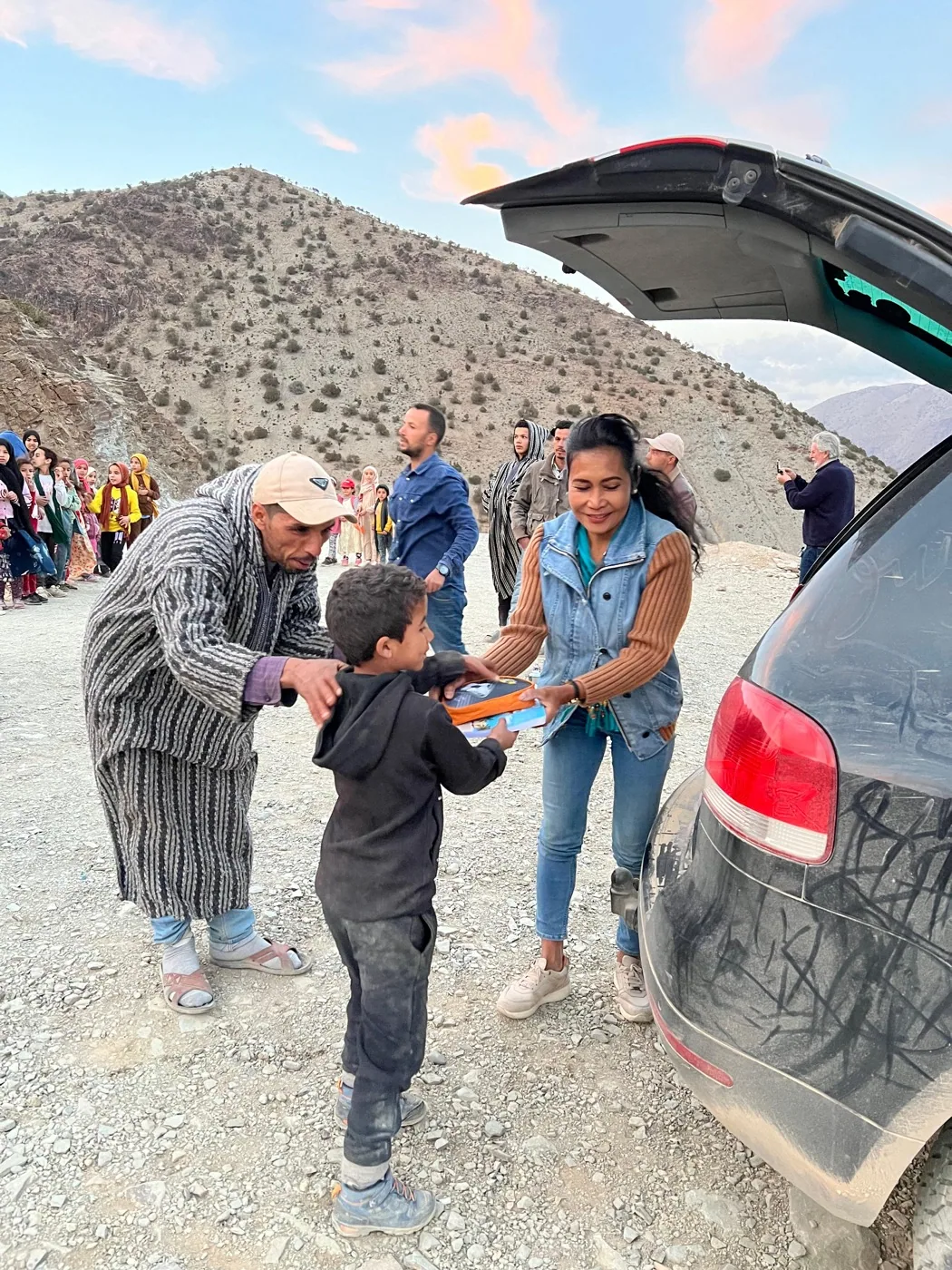
Morocco, November 2024: school supplies delivered with communities.
School supplies reached children directly and in bulk through trusted families and community representatives.
From small personal distributions to a visible community programme.
School Aid returned to Morocco to bring practical learning materials to children in remote communities affected by the earthquake and the continuing shortage of educational resources.
David and Maribeth de Montaigne initially explored established administrative and school channels. Local circumstances made direct school involvement difficult, so they adapted the programme around the people closest to the children.
Working with community leadership, parents and families, School Aid organised visible gatherings where materials could be placed directly into children’s hands. Alongside those personal distributions, larger quantities of school supplies were entrusted to families and recognised local representatives for placement and use in the schools.
Trust made the programme work: families gathered, local representatives took responsibility and materials reached the children.
Parents could see what was supplied, children received materials directly and communities assumed an active role in making the programme effective. The method provided a clear route from School Aid to the children while reducing dependence on a long administrative chain.
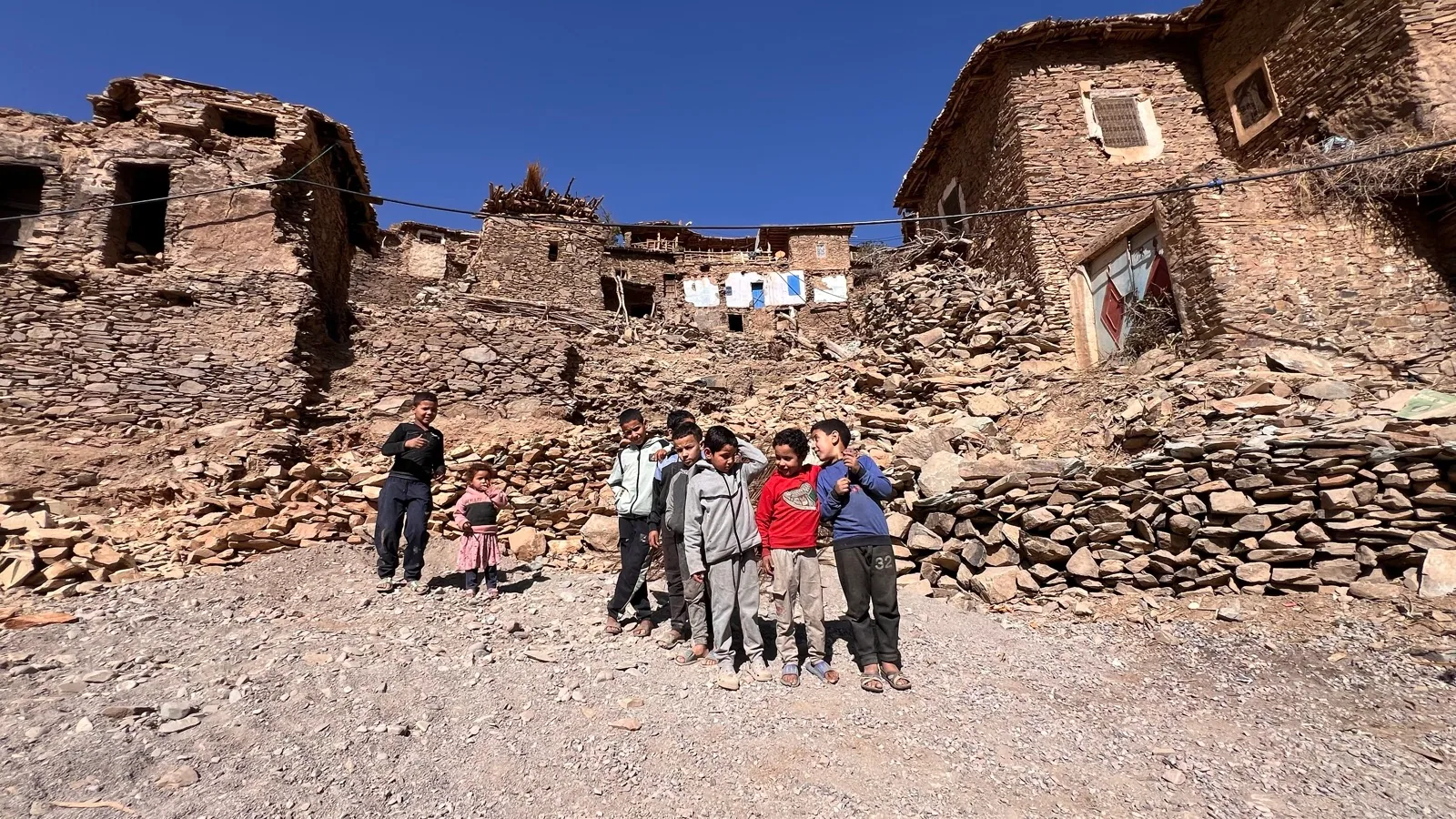
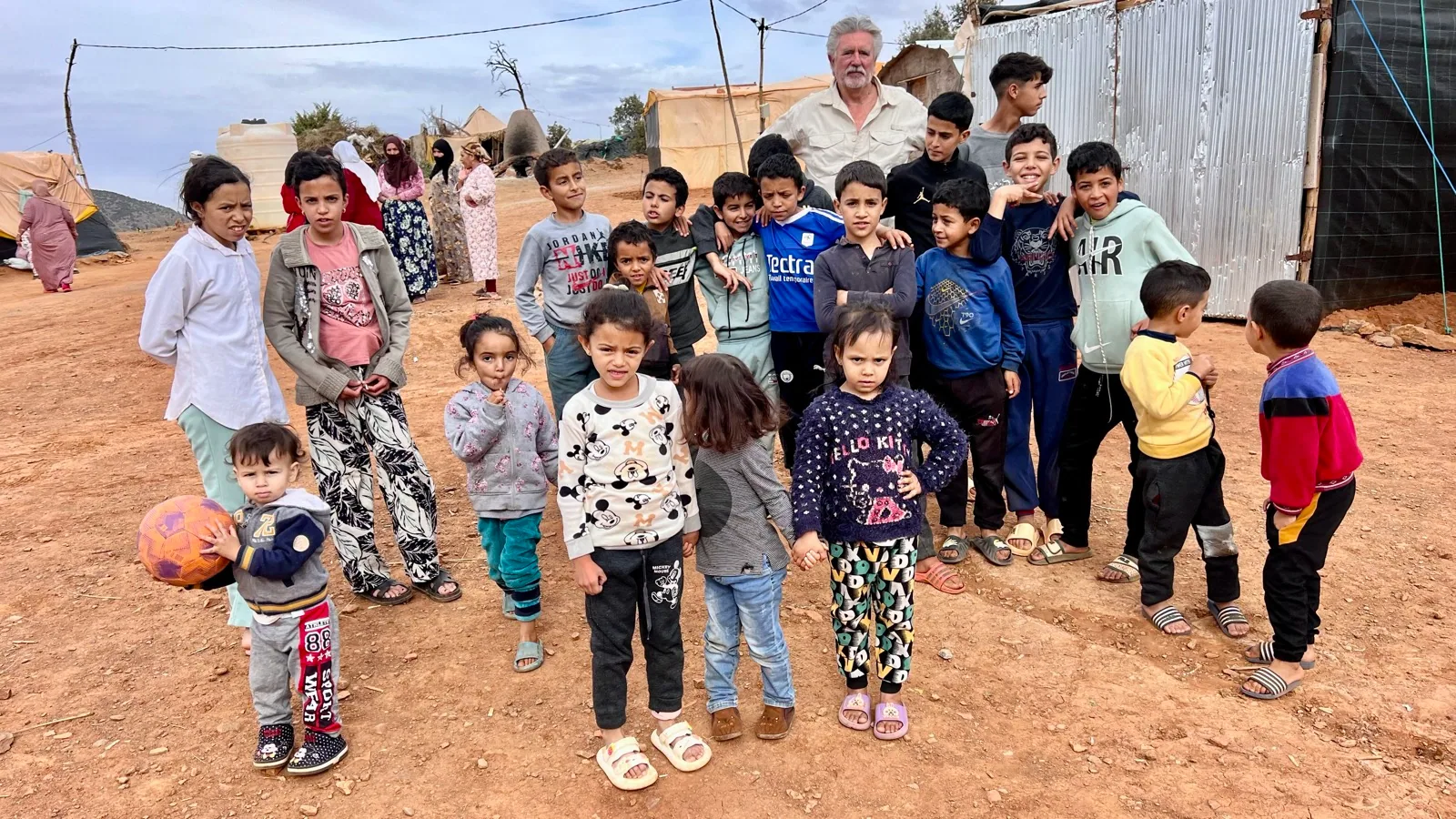
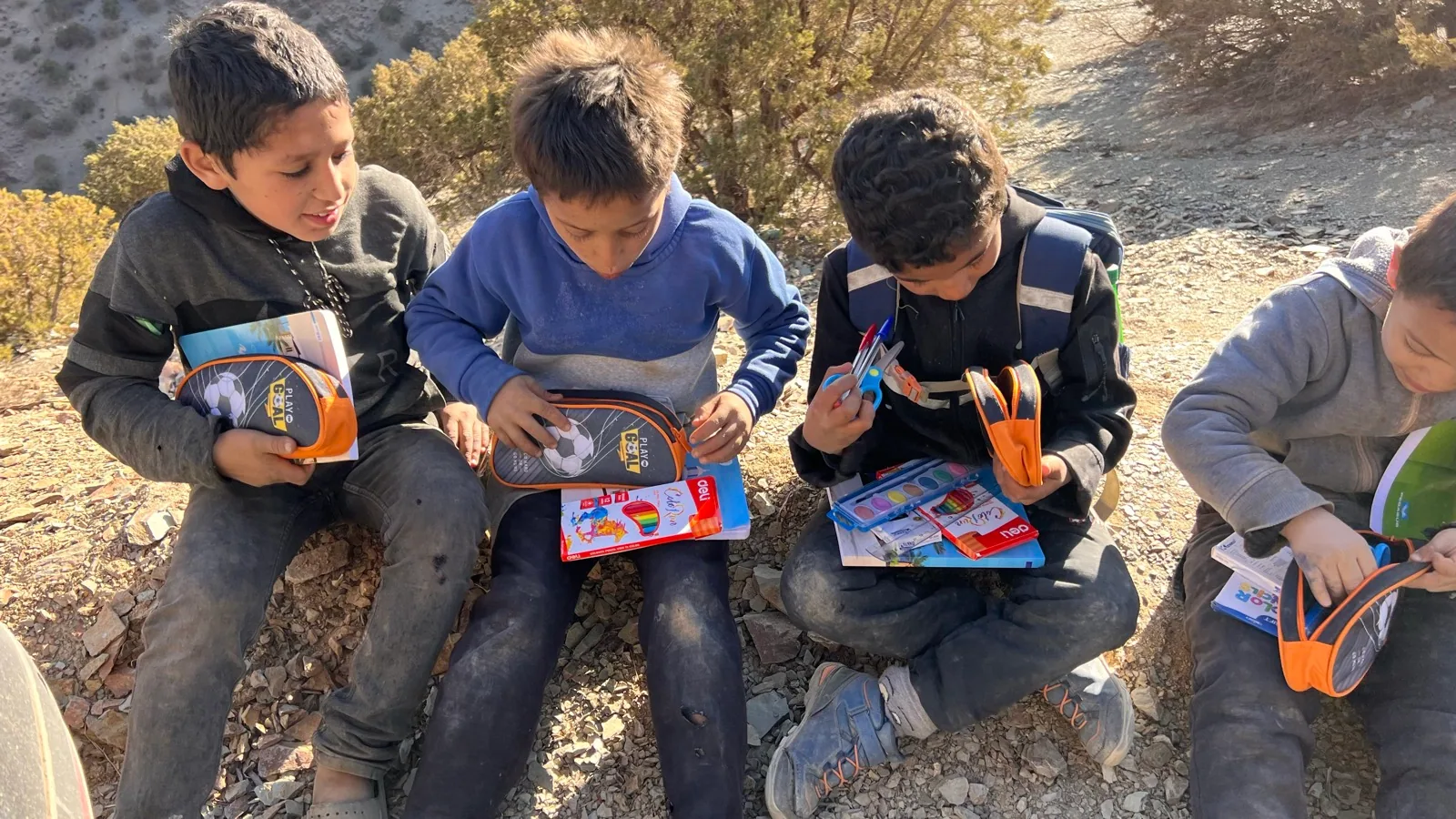
Direct help and bulk supply.
The mission combined personal handovers with larger quantities entrusted locally for placement and use in the schools.
- Pens and pencils
- Paper and writing materials
- Pencil cases
- School bags and shoulder bags
- Other practical supplies selected locally
- Bulk quantities entrusted to families and local representatives for school use
Five named areas in the current record.
Dated and location-associated photographs and videos document travel through Amizmiz, Anougal, Assif El Mal, Azgour and Ijoukak.
A method capable of continuing.
November established a visible community-led distribution model, a practical method for direct and bulk delivery, stronger relationships with parents and local leadership, and a foundation for returning to the same communities.
Mission three: returning, listening and planning the next stage.
In January 2025, School Aid continued practical deliveries while discussing how solar-powered digital learning could be held and governed locally.